Trek Gallery
8–9 Days (4–5 days trekking)
5,200m (Yunnan-Tibet Border Pass)
Challenging (★★★★)
From $1,280 per person
40–50 km
2,600m / 3,600m
4–12 people
May – Early November
In southwest China, at the border of Yunnan and Tibet, stands the world-renowned yet perpetually veiled Meili Snow Mountain range. While most travelers congregate at the viewing platform of Feilai Temple or flock to the “hiker’s paradise” of Yubeng Village, a more primal, majestic, and soul-stirring realm lies quietly on the sacred mountain’s northern side, awaiting true explorers. This is the Meili Snow Mountain North Slope, hailed by veteran mountaineers as “the last secret land of Meili” and “the place closest to the mountain deity Kawagarbo.”
Many believe this hidden land is one of the prototypes for “Shangri-La” depicted by British author James Hilton in Lost Horizon. It is not a specific village, but a complete world woven from snow mountains, glaciers, lakes, meadows, and ancient culture. Trekking here, you will not only experience landscapes rivaling Nepal’s Everest region (EBC) but also touch the soul of a pilgrimage route over eight centuries old. This is a dual journey of body and spirit — a wilderness feast for the brave and the devout.
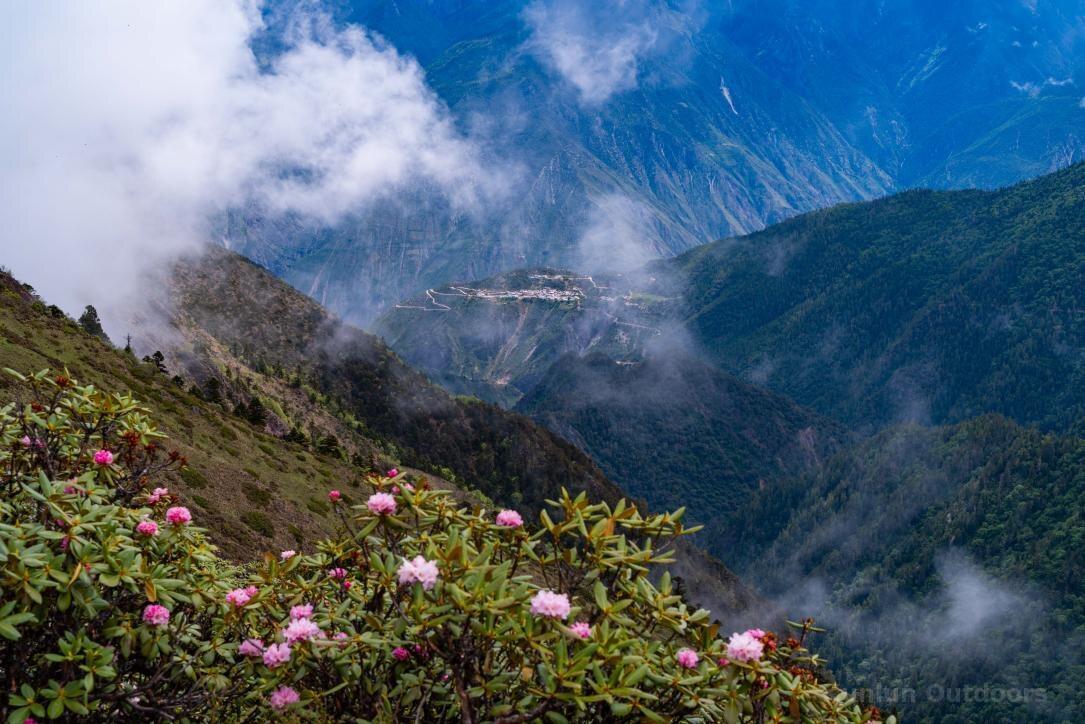
From the ~3,000-meter dry-hot valley of the Lancang River to the 5,200-meter glacial pass, you traverse several distinct ecosystems in just a few days. You’ll walk through primeval forests carpeted with alpine rhododendrons, cross vast moraines left by ancient glaciers, stand beneath towering ice faces glowing ethereal blue, and camp beneath the Milky Way with zero light pollution. The Meili North Slope delivers an extreme compression of landscapes that few treks on Earth can match.
Altitude: 2,400m | Trekking: None
Participants arrive in Lijiang City from worldwide. We arrange airport transfers to the gathering hotel. In the afternoon, the guide checks equipment at the hotel. A pre-trek briefing is held at 6 PM, followed by a welcome dinner. Afterwards, explore the UNESCO-listed Lijiang Ancient Town or join a Naxi Dongba papermaking cultural experience.
Altitude: 3,300m | Drive: 350 km, ~6.5h | Trekking: None
Depart Lijiang’s morning light and ascend along skyline roads to the snowy secret land of Shangri-La. In the ancient Dukezong Town, experience the millennia-old art of Thangka painting — an intangible cultural heritage — gaining inner peace and unique travel memories.
Altitude: 3,400m | Drive: 180 km, ~4h | Trekking: None
Visit Yunnan’s largest Tibetan Buddhist monastery — Songzanlin. Then traverse a key stop on the ancient Tea Horse Road, arriving at the premier viewing platform for all thirteen peaks of Meili Snow Mountain — Feilai Temple. Here, witness the legendary “Golden Mountain Sunrise” at dawn.
Altitude: 2,900m → 3,550m | Trekking: 9 km, ~4–5h | Ascent: 550m
Drive to the trek starting point, Yagong Village, located in a valley above the Lancang River. Here, gear is handed to mule teams — you carry only a light daypack. Trek through primeval forests and bamboo groves with snow peaks playing hide-and-seek in the distance. Cross a wooden bridge and scree slope to reach Bamboo Forest Camp, with views of Leo Snow Mountain (Kawagarbo II, 6,509m).
Altitude: 3,550m → 4,100m | Trekking: 5 km, ~4h | Ascent: 600m
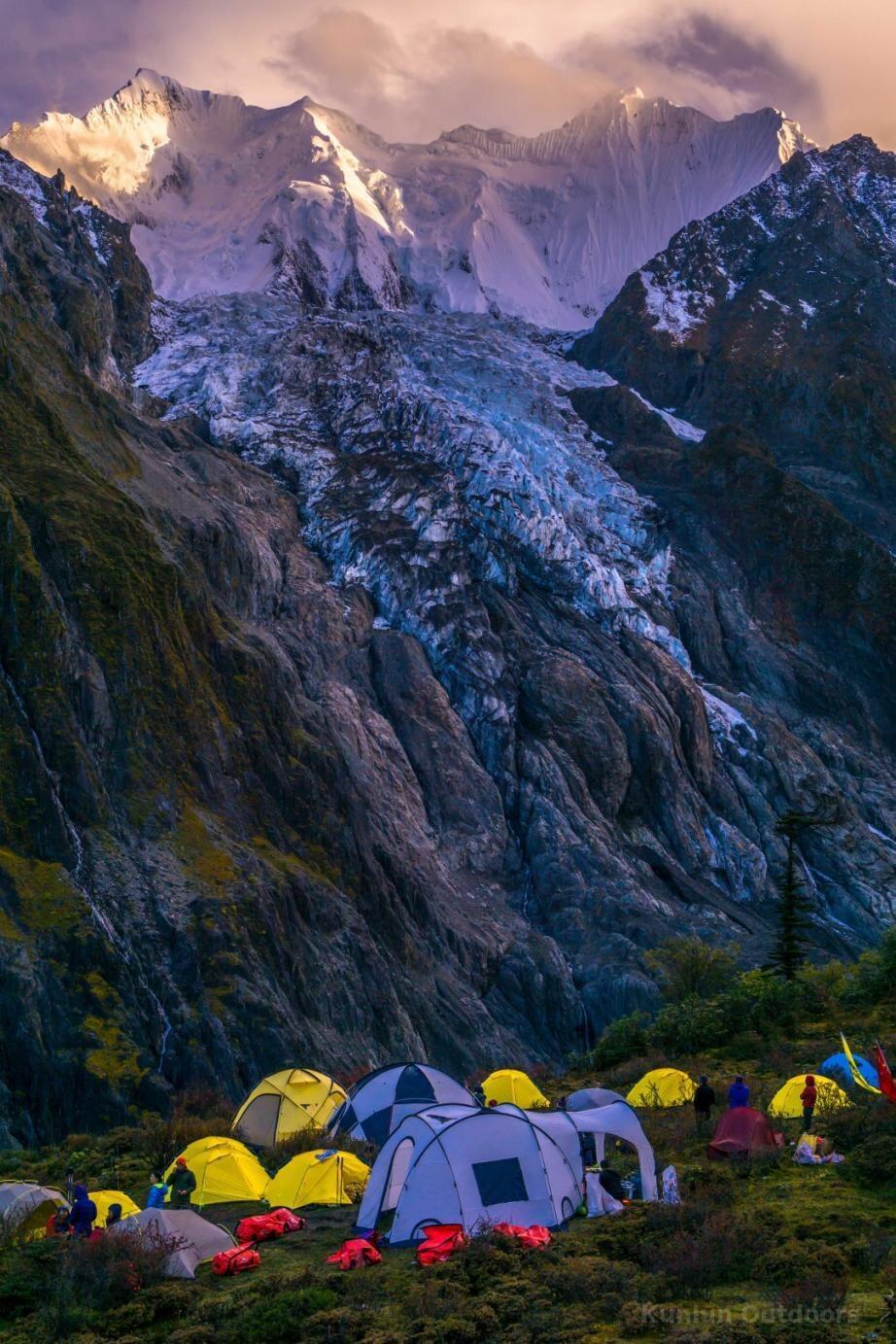
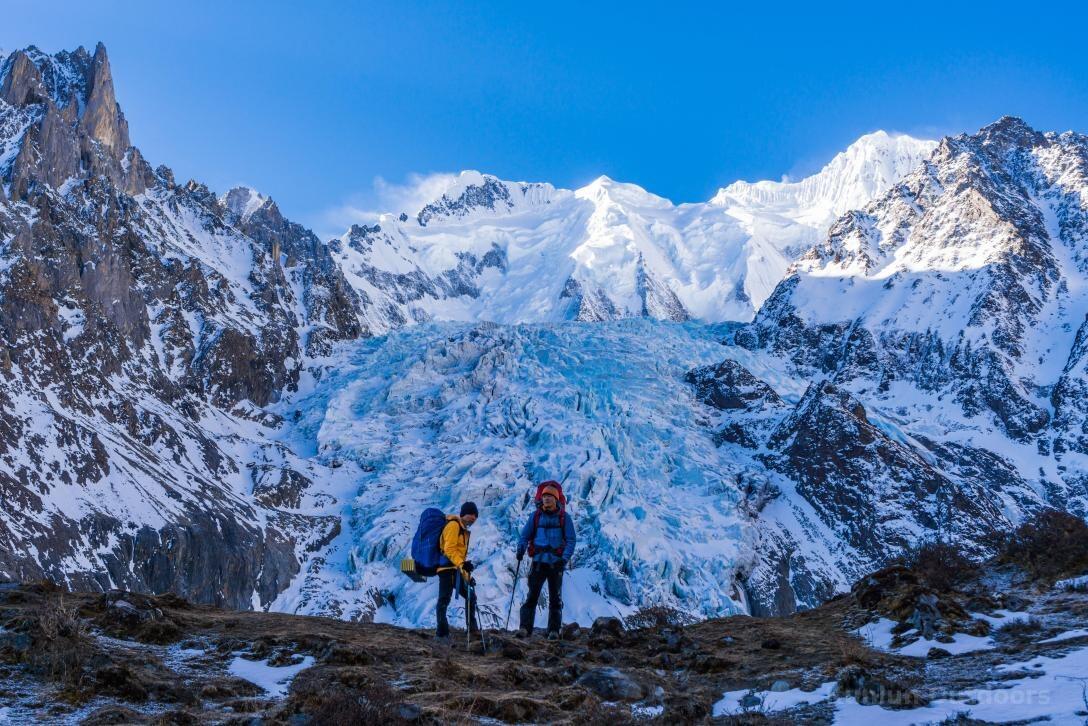
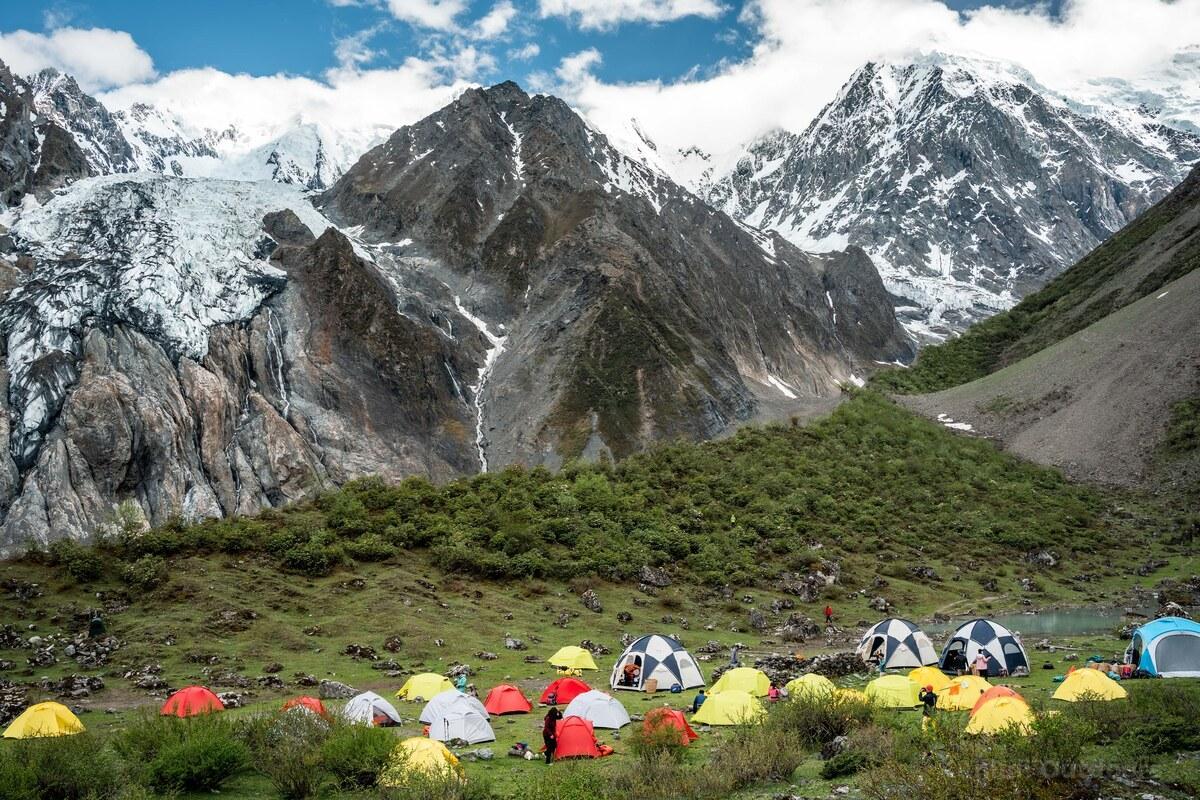
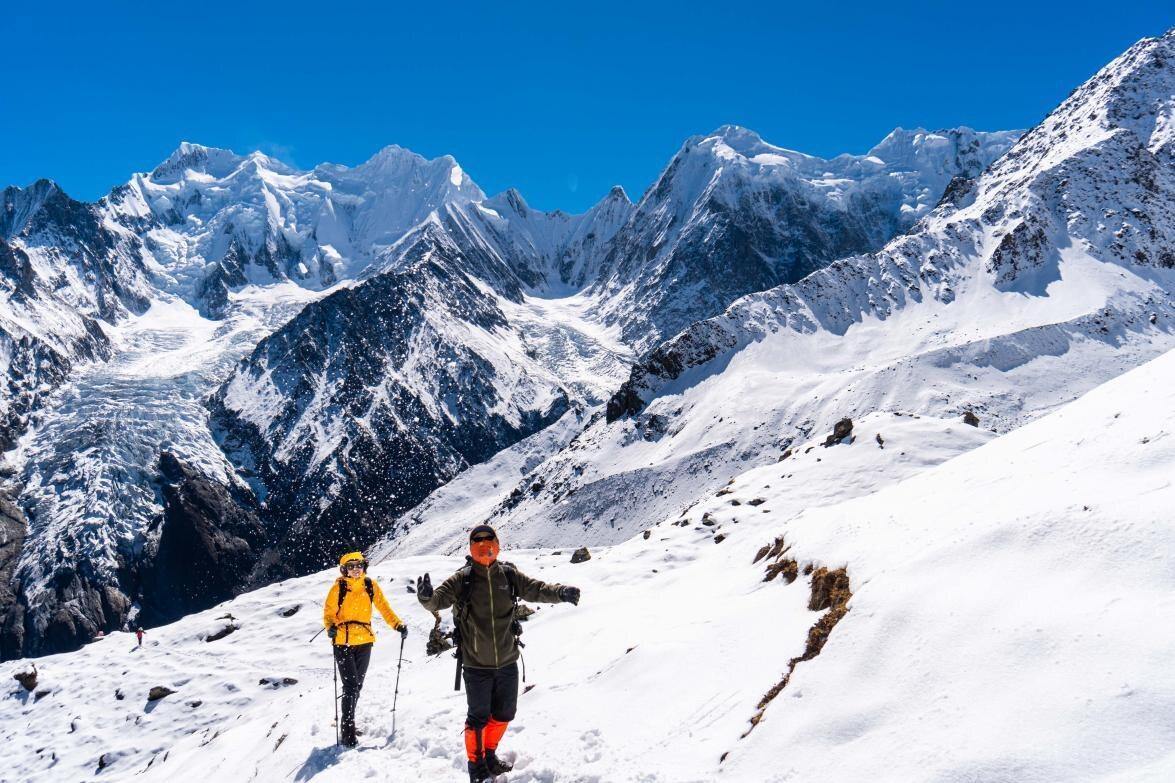
Follow a stream towards the snow mountains, gradually gaining altitude. Traverse forests, cross rocky terrain, and Mangkang Laka Peak (6,040m) comes fully into view. Pass an abandoned cattle farm, cross a wooden bridge, climb a slope, and the massive Nairidingka Glacier greets you. Arrive at Pojun Camp — the scenic heart of the entire journey, facing three 6,000-meter peaks with glaciers seemingly within reach. Today serves as an acclimatization day.
Altitude: 4,100m → 4,770m → 4,200m | Trekking: 6 km, ~5–6h | Ascent: 670m / Descent: 570m
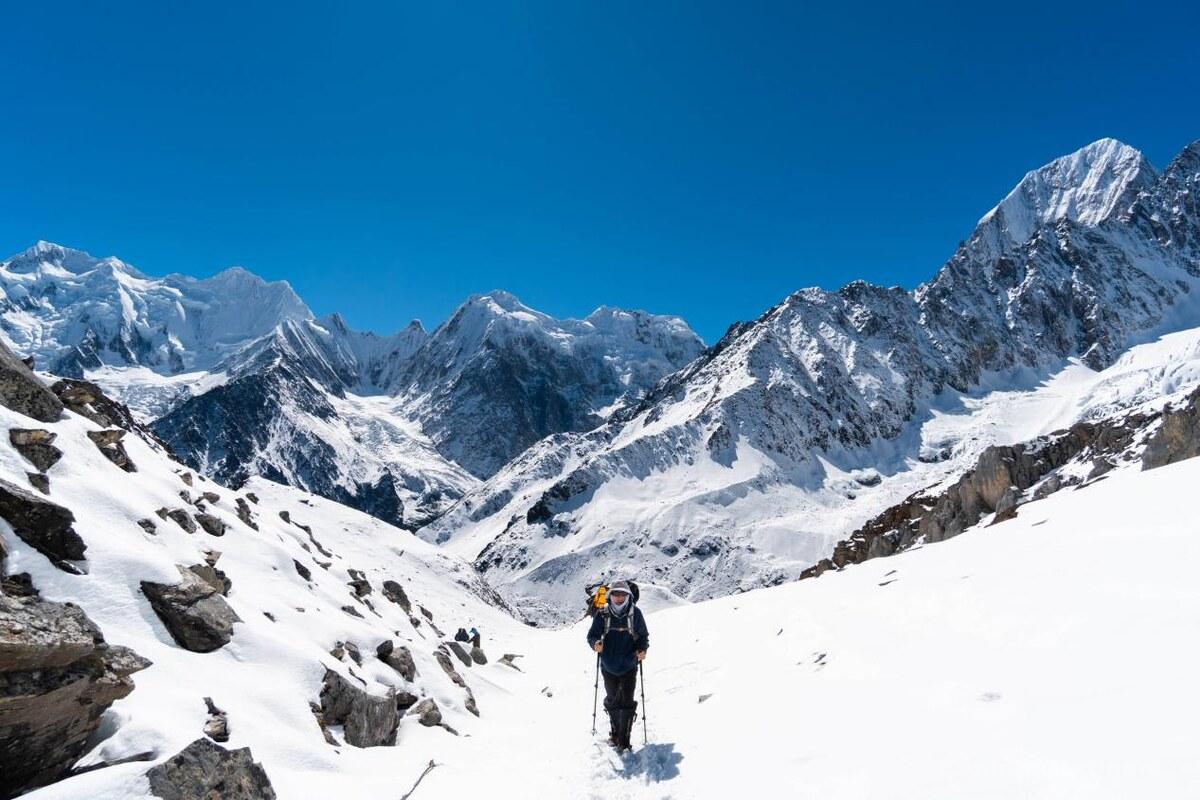
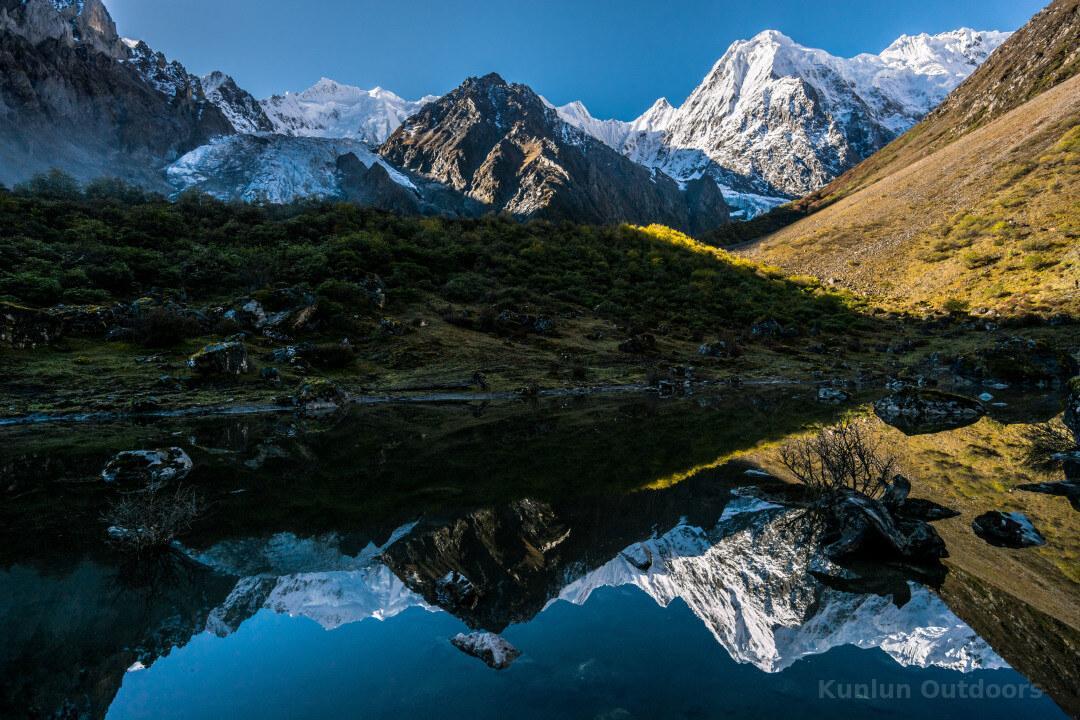
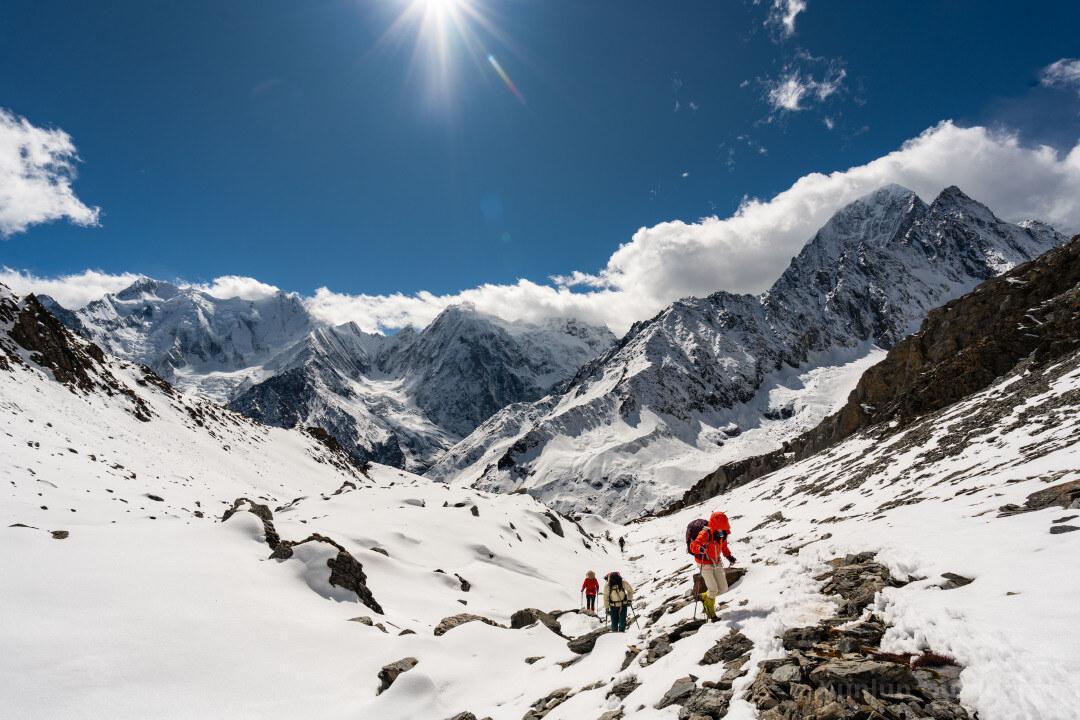
Capture the Golden Mountain Sunrise if weather permits, then ascend past steep scree slopes into the heart of a glacial valley relic at 4,500m. Skirt a lateral moraine to reach Ciding Pass — one of the journey’s key challenges. Enjoy panoramic views of the North Slope and glaciers. A steep 500m+ descent leads to the valley floor and Pujiang Pasture Camp at 4,200m, a beautiful alpine meadow with streams and wildflowers.
Altitude: 4,200m → 5,200m → 4,200m | Trekking: 9 km | Ascent: 1,000m / Descent: 1,000m
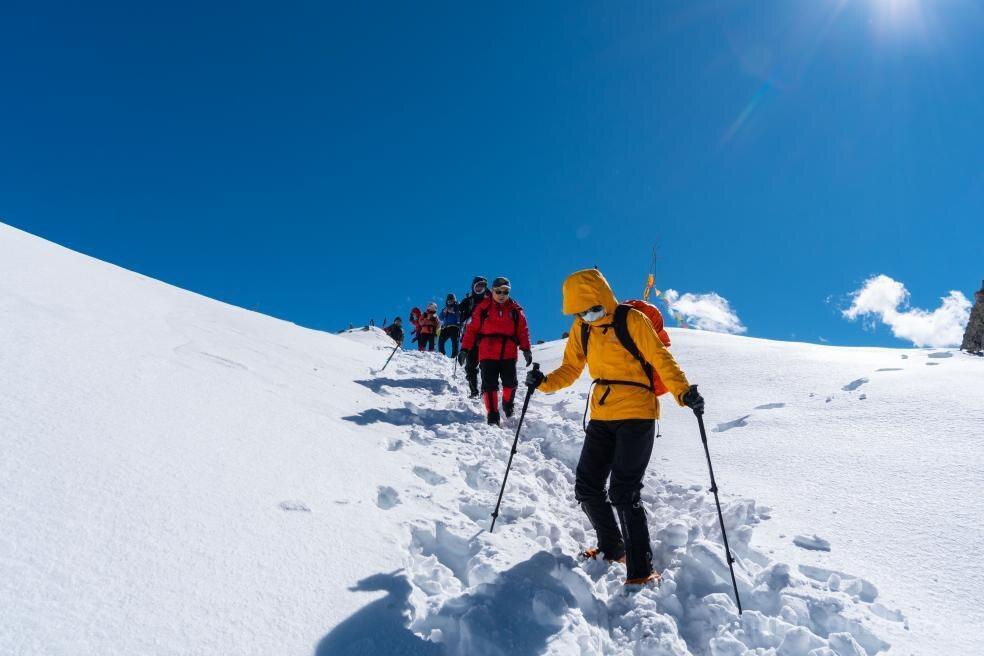
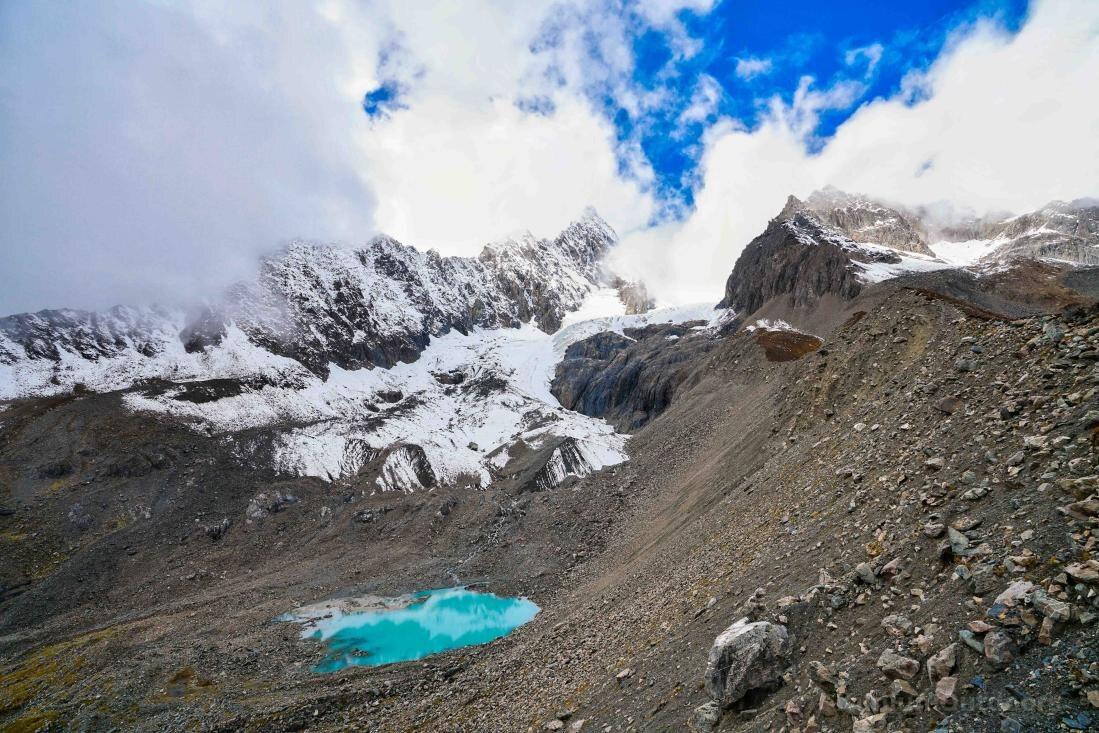
This is an optional day for those who wish to push to the journey’s highest point. Head towards Tibet, ascending to the 5,200m Yunnan-Tibet Border Pass — the journey’s greatest challenge. The terrain is treacherous with no clear trail on either side. From the pass, the entire North Slope unfolds before you; on the other side, Tibet’s Mukong Snow Mountain appears. Continue along the ridge to discover the Meili Twin Lakes — a rare pair of glacial erosion lakes at 5,050m, their color shifting between sapphire blue and emerald green. Return to Pujiang Pasture Camp.
Altitude: 4,200m → 3,000m | Trekking: 16 km | Ascent: 500m / Descent: 1,700m
Depart camp early, entering the forest. Ascend to Dalaiyigu Pasture, then climb to the Dala Transverse Pass for one final panoramic view of the entire North Slope snow mountains. Descend through rich forest, crossing several wooden bridges, and return to Yagong Village where the trek concludes. Drive back to Feilai Temple for a celebration dinner and overnight at the hotel.
Drive: 340 km, ~6h | Trekking: None
One last chance to witness the famous Meili “Golden Mountain Sunrise” at dawn. After breakfast, depart by vehicle, passing the Baima Snow Mountain range and returning to Lijiang. The journey concludes successfully.
Face three 6,000m+ peaks (Nairidingka, Mangkang Laka, Laireigongka) with massive glaciers seemingly within reach. The premier spot for the legendary “Golden Mountain Sunrise.”
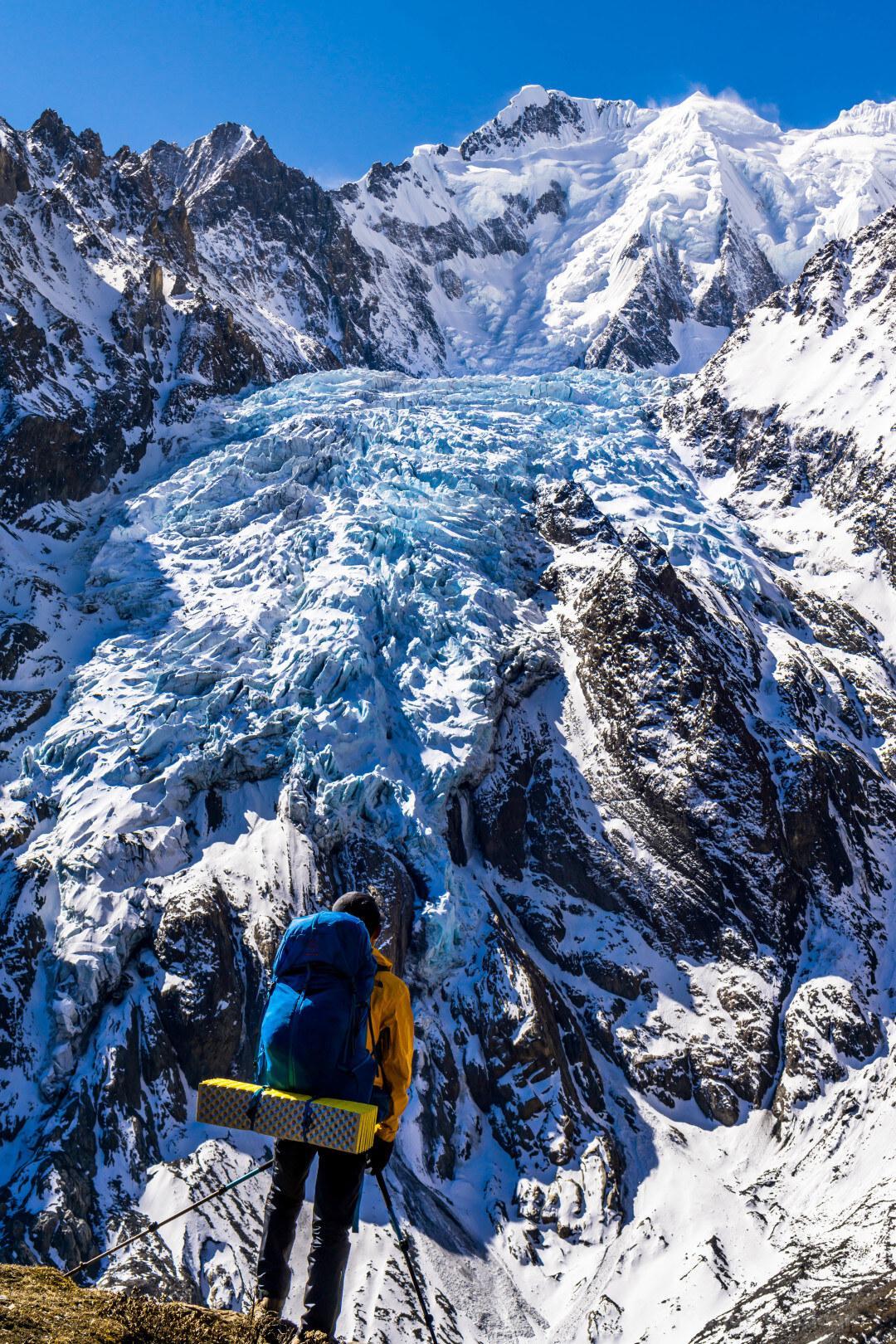
One of the most spectacular glaciers in the region — towering ice cliffs and dense crevasses shimmer with an ethereal deep blue, a window into the Ice Age.
A rare pair of glacial erosion lakes at 5,050m, their color shifting between sapphire and emerald. One of the “Three Sacred Lakes of Meili Snow Mountain.”
With zero light pollution, the Milky Way arches across the sky nightly, creating eternal images of star silhouettes against snow peaks.
Tread paths that overlap the sacred 800-year-old Meili kora. Encounter mani stone piles, colorful prayer flags, and the living spiritual traditions of Tibetan Buddhism.
From subtropical river valley (3,000m) to permanent glacier zone (5,200m) — traverse from temperate to polar ecosystems in just a few days, a landscape compression rivaling Nepal’s EBC.
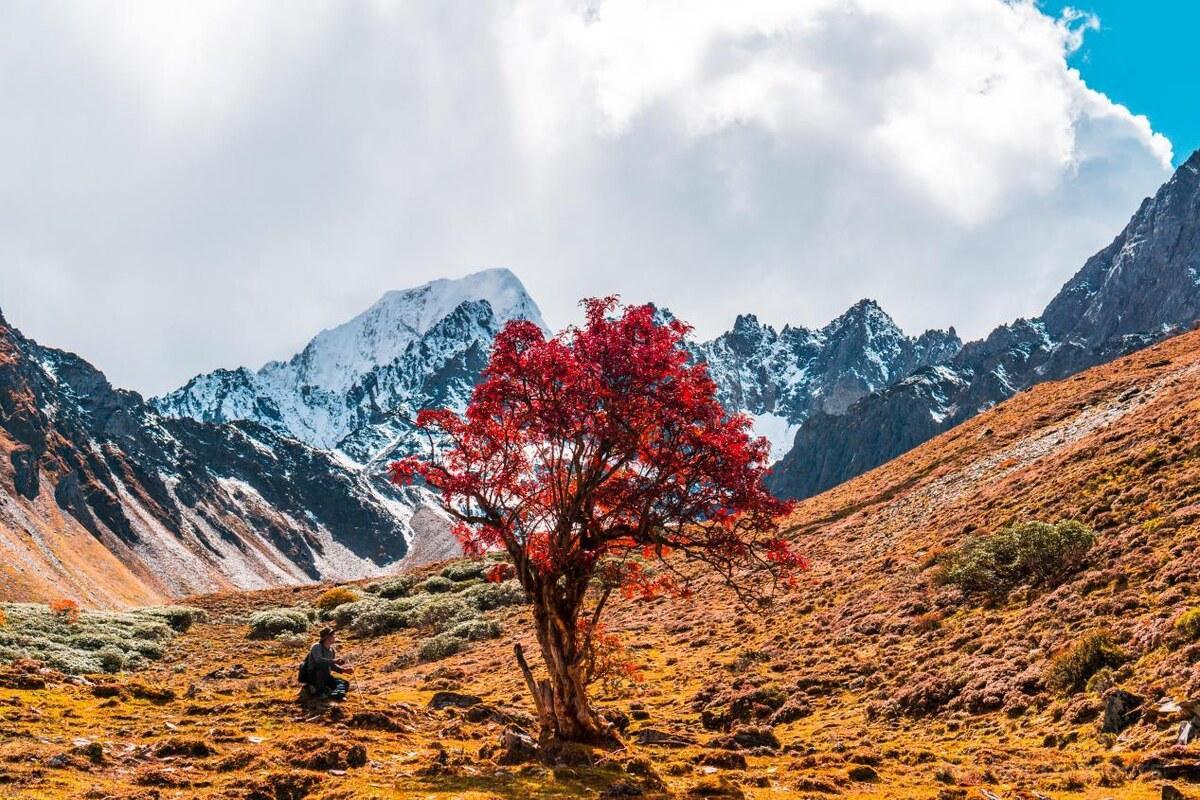
September–October is the golden season: rainy season ends, skies are clear, and autumn colors are spectacular. May–June offers alpine rhododendron blooms and cordyceps harvesting cultural experiences. July–August is the warmest but wettest period.
Good physical fitness and prior outdoor experience required. You should be comfortable hiking 4–6 hours per day at high altitude with a light daypack (3–5 kg). No technical climbing skills needed, but sure-footedness on steep scree slopes is essential. Prior high-altitude experience (3,500m+) is strongly recommended.
Waterproof hardshell jacket and pants, down sleeping bag (rated to -10°C), mid/high-cut waterproof hiking boots, trekking poles, headlamp, sun protection (SPF50+), insulated water bottle. All camping gear and meals are provided by the team.
The team carries medical oxygen, a satellite phone, and a comprehensive first-aid kit. The guide monitors each member’s blood oxygen and heart rate daily. The trek is designed with gradual acclimatization in mind. Altitude sickness medication and emergency evacuation plans are in place.
Kawagarbo (6,740m) is the foremost sacred mountain in Tibetan Buddhism and has never been summited. Never point at the peaks with your finger (use an open palm), do not discuss “conquering” the mountain, always circle mani piles clockwise, and accept butter tea with both hands.
Mobile signal is limited or absent during most of the trekking days. A satellite phone is carried by the team for emergencies. Please inform family/friends beforehand about limited connectivity.
No reviews yet. Be the first to share your experience!